

The Thoughtful One
Play Guide
Preschool 36-60 months
What’s inside your kit:
Lock Box
Pattern Sticks
The Number Board
Meal Time Set
Our Morning Together - bilingual storybook
The Thoughtful One Play Guide
How to Use This Kit
Your child is ready for more.
At this stage, children begin to:
Solve problems independently
Recognize and extend patterns
Follow multi-step sequences
Build confidence through responsibility
This kit is designed to help them think, problem-solve, and participate more independently in everyday life.
Every NURIA kit includes a thoughtfully selected bilingual storybook that helps children connect what they’re learning through play to the world around them.
Introduce one activity at a time
Let your child repeat before increasing difficulty
Offer help only when they ask - or when they are clearly stuck and frustrated
Struggle is part of learning.
Your job is to stay close - not to solve it for them.
Stage 1 - Logic & Problem Solving
Parent Tip
Resist the urge to open it for them too quickly.
Give them time - longer than feels comfortable.
Trial and error is the point.
Goal: Help children solve problems independently through trial and self-correction.
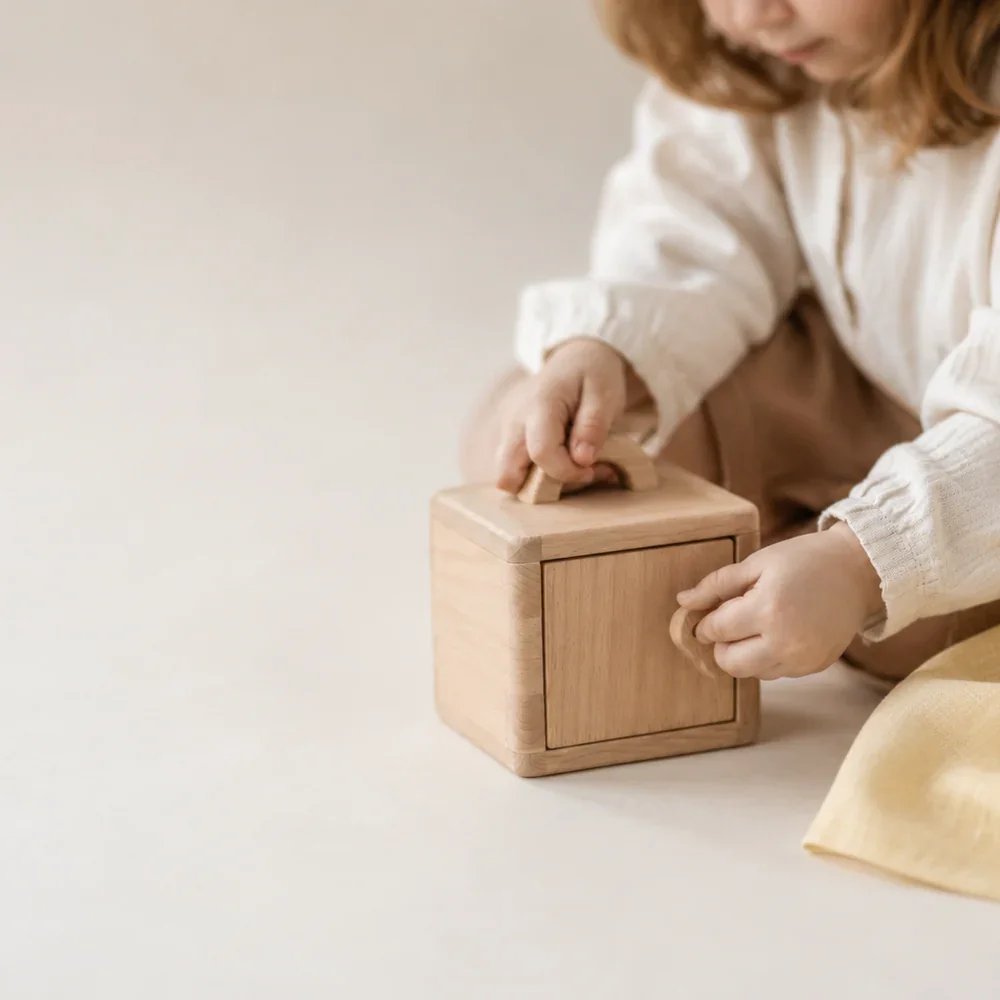
Lock Box
Start by letting your child explore each lock freely - no instructions
Encourage them to open each mechanism independently
Once they know one lock, encourage them to try again without help
Then challenge: “Can you close them?”
Builds: Problem solving and sequencing . Hand coordination and fine motor precision . Persistence through frustration . Memory of how each mechanism works

Stage 2 - Patterns & Early Math Thinking
Goal: Build sequencing, analytical thinking, and confident number sense.
Pattern Sticks
Start with simple two-element patterns (AB, AB)
Move to more complex sequences as your child gains confidence
Encourage them to extend the pattern themselves - not just copy it
Builds: Quantity recognition and number sense . Counting confidence . Fine motor skills
Pattern Tip
Keep both activities playful.
Avoid correcting immediately - ask questions instead:
“Does that look right to you?”
“What comes next?”

Stage 3 - Memory & Strategy
Goal: Strengthen focus, recall, and patience through increasing challenge.
The Number Board - Advanced
Once your child knows the board well, turn the reference card face-down
Ask them to place the pegs from memory
Introduce a turn-taking game: one player places, the other checks
Builds: Analytical thinking . Confidence in self-correction . Creative problem-setting
Parent Tip
Let them catch your mistakes.
Being the “teacher” builds a different kind of confidence than being the learner.
Stage 4 - Real Life Independence
Parent Tip
This is not just play - it is preparation.
When a child practices setting the table in play, they are ready to do it in life.
Let them.
Goal: Build confidence through responsibility and everyday routines.
Meal Time Set
Practice real-life table routines through play:
Setting the table - place setting, cups, cutlery
Sorting utensils by type
Serving pretend meals to family members
Cleaning up after play - clearing, stacking, putting away
Invite your child into real routines alongside this play:
“Can you set your plate tonight?”
“How many cups do we need?”
Builds: Responsibility and sequencing . Imagination and role play . Real-world independence . Contribution to family life
The Book - Our Morning Together
Our Morning Together is a quiet story about a child and their grandfather on a balcony - tea, morning light, a small spill, and trying again. It is a story about presence and the small moments that build independence. Your child sees responsibility, noticing their environment, making a mistake, and what happens next.
Before Play
Ask together:
“What happens first in the story?”
“What does the child try to do?”
“What happened when the milk spilled?”
“What did they do after?”
During Play
Use your Meal Time Set to recreate the breakfast scene:
Set the table the way the child and Gedo did
Pour pretend drinks - carefully
Serve food and tidy up after
Use the Number Board:
“How many cups do we need for breakfast? Can you count them out?”
Use the Lock Box:
Hide small “breakfast items” inside and create a problem-solving game to retrieve them
After Play
Return to the story with questions:
“What happened when the child tried?”
“What did Gedo say?”
“What did the child do next?”
“Have you ever tried something hard and gotten it right the second time?”
Builds: Resilience and repair - understanding that mistakes are recoverable . Sequencing and narrative thinking . Responsibility and independence . Emotional awareness: connecting story events to real feelings
Combination Play
The Restaurant Game
Use the Meal Time Set + the Number Board together:
Serve plates and count them out
“How many guests?”
“How many plates/cups do we need?”
Take orders and “prepare” the right quantities
Pattern Kitchen
Use Pattern Sticks + Meal Time Set:
Sort and arrange meal items in patterns on the table
“Two plates, one cup, two, plates, one cup - what comes next?”
The Treasure Box
Use the Lock Box as a treasure chest:
Hide small objects inside
Create clues or simple riddles to unlock it
What to Expect
At this stage, your child may:
Want harder challenges before fully mastering the current one
Repeat a favourite activity many times, even after they’ve “mastered” it
Begin creating their own rules for how a toy should be used
All of this is a sign of growing independence and confidence.
Follow their lead.

NURIA Philosophy
At this stage, children do not need constant entertainment.
They need meaningful challenges that build real confidence - the kind that comes from figuring something out, trying again after a mistake, and being trusted with responsibility.
We believe in:
Calm play that requires real thinking
Independence built through repetition and small responsibilities
Presence - a child who knows someone is nearby, without needing to be directed every moment
This kit is designed to be put in front of a child and leaving them to explore, imagine, create.
Want to find this again? Your play guides are always in your NURIA account.